Long before artificial light filled our evenings, night arrived gradually.
As the sun lowered, light softened. Firelight and candlelight provided warmth, not brightness. They flickered briefly, then faded. Darkness was not sudden or alarming. It was expected. Over generations, the body learned that night was a time to slow, to release, to rest.
This rhythm shaped how the nervous system settled in the evening. Hormones followed the dimming of light. Body temperature began to fall. The mind grew quieter, not because it was instructed to, but because the environment made it possible. This is the foundation of our natural circadian rhythm.
Modern nights rarely feel like night anymore. Indoor evenings stay evenly lit. Bright bulbs extend the day long past sunset. Screens glow at the edges of rest. The shift is subtle, almost unnoticeable, yet the body registers it. How light affects sleep is not always obvious, but it is deeply felt.
This change is easy to miss because it happened slowly. One light at a time. One later evening at a time. But the nervous system notices, even when we do not. Sleep patterns respond. Rest becomes lighter. Falling asleep takes longer. Night loses some of its depth.
Red light night lights belong in this conversation, not as a solution or a therapy, but as a small environmental choice. A way of letting night feel a little more like night again.
When Night No Longer Feels Like Night
Evenings indoors often stay visually bright long after the sun has set.
Overhead lamps, kitchen lights, bathroom mirrors. Most are designed for daytime clarity. White light fills the room evenly. Bright light keeps edges sharp. Without meaning to, we extend the visual language of day well into the hours meant for winding down.
This is easy to miss.
The body’s internal clock expects contrast. Light and dark. Activity and stillness. Over generations, this contrast helped shape sleep patterns, signaling when to be alert and when to soften. When that contrast fades, the message becomes harder to read.
(Supported by research on how light entrains the body’s circadian clock and sleep timing. NIH overview of light, circadian rhythms, and sleep)
Blue light exposure, which is common in modern bulbs and screens, quietly carries daytime signals into the night. Not enough to feel disruptive in the moment. Just enough to delay sleep onset little by little.
[INTERNAL LINK: Screens & Sleep article]
Each exposure seems minor on its own. One light switch. One screen check. One well lit room.
Over time, the accumulation matters. Falling asleep takes longer. Rest feels lighter. The night does not quite land the way it used to.
This is not a failure of discipline or routine. It is an environmental mismatch. It’s a world built for visibility rather than rhythm. Understanding how light behaves in the evening helps explain why gentler choices matter.
[INTERNAL LINK: Evening Lighting Guide]
Not as rules to follow, but as ways of restoring a sense of night to the body again.
How the Body Interprets Light After Sunset
Night is something the body reads.
After sunset, the nervous system begins paying closer attention to the quality of light in the environment. Subtle shifts in brightness and color carry meaning. These signals help the internal clock understand when to release the day and make space for rest. Most of this happens quietly, without conscious awareness, guided by systems that have been keeping time far longer than modern life.
The Signals the Eyes Send at Night
Long before anyone understood light in terms of wavelengths or receptors, the body was already reading it.
The eyes do more than help us see. They quietly track light for timing. Special cells in the retina monitor brightness and color, not to form images, but to inform the system what time of day it is. This process happens automatically. It does not require awareness or effort.
These cells are especially sensitive to short wavelengths of light. Bright white and blue light resemble the qualities of midday. When they reach the eyes after sunset, the body receives a familiar message… daytime is still here.
Red and amber light carry a different signal. Their longer wavelengths register as softer and less alerting. They more closely resemble firelight or dusk. The nervous system reads them as quieter, more compatible with evening.
This system has been keeping time for a very long time. It responds to patterns, not intentions. Even when we believe we are winding down, the signals the eyes receive continue to shape how the body prepares for night.
The body notices even when we do not.
[Internal link: Melatonin production article]
Light, Melatonin, and the Evening Shift
As evening deepens, the body begins a gentle internal shift.
Melatonin production rises as light fades. This hormone does not force sleep. It creates the conditions for it. Body temperature lowers slightly. Alertness softens. The system moves toward rest in its own time.
Bright light, especially blue and bright white light, delays this process. The signal remains daytime. Melatonin release slows. Sleep onset drifts later, often without a clear cause.
Red light behaves differently, particularly at low brightness. Its impact on melatonin levels appears minimal when compared to brighter, shorter wavelength light. This is one reason red night lights are often described as gentler for evening use.
This does not mean red light is neutral. The body still responds to light after sunset. Intensity matters. Timing matters. Prolonged exposure, even to softer light, still communicates information to the nervous system.
The body does not measure intention. It measures exposure.
What Red Light Makes Possible at Night
Red light night lights are often misunderstood because they are grouped with far brighter tools. They are not meant to stimulate, treat, or correct the body. Their role is much simpler.
A dim red glow provides orientation without pulling the nervous system back into daytime. It allows the eyes to adjust in the middle of the night without flooding the system with brightness. This preserves night vision and helps the body remain in a quieter state while moving through dark spaces.
These lights are most useful during brief awakenings. A trip down the hallway. A bathroom visit. Checking on a child. Moments that require awareness, but not alertness. In these situations, bright or white light can feel jarring, even if it is only on for a short time.
Red night lights work best in transitional spaces. Hallways. Bathrooms. Children’s rooms. Places where light is needed for safety and navigation, not for activity or focus.
This was never meant to be bright.
This is not about optimization or performance, but respecting the tone of night and allowing the body to return to rest more easily once the light is gone.
[Internal link: Nighttime home rhythm article]
[Internal link: Child sleep environment article]
Red Light Compared to Amber and Warm Light
Amber and warm light are usually considered softer choices for evening and night. When dimmed properly, they can support a calmer environment and feel more compatible with rest than white or blue light.
Red light provides a clearer separation from daytime lighting. Its tone is distinct. The body is less likely to confuse it with morning or indoor daytime light. For some people, this clarity makes it easier to remain in a nighttime state during brief awakenings.
Sensitivity varies. So does context. Room size, distance from the light source, and brightness settings all shape how light is perceived. A warm amber lamp in a large room may feel gentle. The same light in a small hallway may feel overwhelming.
There is no perfect amount of light for everyone. The system responds to patterns, not perfection. Over time, consistent, softer choices help the body recognize when night is meant to stay quiet.
The system responds to patterns, not perfection.
[Internal link: Nighttime home rhythm article]
Is It Okay to Sleep With a Red Light On All Night?
Darkness remains the ideal sleep environment. This has always been true, long before artificial light complicated the evening hours. The body rests most deeply when night feels complete and uninterrupted.
Even soft light continues to register once sleep has begun. The eyes may be closed, but the system that keeps time still receives information from the environment. Over the course of the night, continuous light can subtly affect the sleep cycle and shorten total sleep time, even when that light is red.
Red light is best understood as a tool for brief use rather than something meant to stay on all night. At very low levels, it can support movement during nighttime waking without fully pulling the body back into alertness. Used continuously, it still changes the tone of the room.
We have found that placement matters as much as color. Motion-activated lights, indirect sources, or lights positioned low and out of direct view tend to be the least disruptive. These allow for orientation when needed while preserving the feeling of a dark room once the moment has passed.
Night still needs to feel like night.
The goal is not perfect darkness at all costs. It is minimal interruption.
A room that returns to darkness quickly gives the nervous system the best chance to settle back into rest.
Red Light Therapy vs Red Night Lights
Red light therapy and red night lights are often grouped together because they share a color, but they serve very different purposes.
Red light therapy devices are designed to deliver bright, concentrated light to specific areas of the body. They are often used in structured sessions and at intensities far stronger than anything meant for nighttime use.
These devices were not designed to support sleep onset or preserve the tone of night. They are meant to stimulate biological responses, not soften them.
Much of the research around red light therapy involves small studies and controlled conditions, often focused on pain, skin, or recovery in healthy people. Results are mixed, and findings vary depending on wavelength, intensity, timing, and duration. This is a developing area of study, not a settled one.
Red night lights serve a different role entirely. They are not therapy devices. They are not intended to activate or treat. Their purpose is environmental. A dim red glow provides orientation during nighttime waking while helping the body remain closer to rest.
We have found that confusion tends to arise when these tools are treated as interchangeable. They are not. One is designed for targeted stimulation. The other is meant to preserve the quiet of night.
[Optional outbound link: Mayo Clinic or Sleep Foundation overview of red light therapy]
When a Soft Light Makes Sense
There are moments when complete darkness is not practical, or even kind. Life does not always allow for ideal conditions, and the body adapts within the spaces it is given.
Red night lights can be supportive during seasons of nighttime caregiving. Parents moving through the quiet hours with a child often need enough light to remain oriented without fully waking the household. In these moments, a softer glow can help preserve a child’s sleep quality while allowing care to happen calmly.
They can also be helpful during periods of transition. Shift work, travel across time zones, or early days of jet lag often disrupt familiar sleep patterns. The nervous system is already adjusting, already listening closely. Gentle lighting can reduce unnecessary stimulation during these unsettled nights.
Some people carry a more sensitive nervous system. For them, abrupt brightness in the night can feel jarring, even distressing. A dim red light offers continuity, allowing movement without a sharp return to alertness.
There are also spaces where safety matters more than darkness. Hallways, stairs, bathrooms, and entryways require visibility. In these places, the goal is not to eliminate light entirely, but to choose a tone that respects the hour.
“The context matters.”
We have found that when light supports the moment rather than dominates it, the body has an easier time returning to rest.
[Internal link: Seasonal sleep shifts]
[Internal link: Nervous system and home environment]
How Red Light Belongs in the Evening
Choosing a red night light does not need to be complicated. The body responds to qualities, not specifications.
A light that produces a pure red or narrow red wavelength tends to be easier for the nervous system to interpret as nighttime. Many standard bulbs labeled as red still emit other colors, which can make the light feel brighter or more stimulating than expected.
What matters most is how the light feels in the room once the rest of the house is quiet.
Flicker and excessive brightness can be surprisingly disruptive, even when the color is gentle. A steady, soft red glow allows the eyes to adjust without strain. In most cases, far less light is needed than people expect. If the room feels fully illuminated, it is likely more than the body needs at night.
Placement makes a quiet difference. Lights placed low to the ground or tucked out of direct view tend to be less alerting. Indirect light preserves orientation without drawing attention to itself and allows the space to remain calm.
We have found that consistency matters more than brand. Using the same gentle lighting pattern night after night helps the body recognize what to expect. And over time, this reduces disruption and supports a more settled return to rest.
The goal is minimal impact. A light that does its job without announcing itself is often the most supportive choice.
Letting Night Be Night
Night was not always something we had to manage.
It arrived slowly, as light faded and the body followed. The evening softened on its own. Rest did not require instruction. It was simply allowed.
Modern life has changed the shape of night, often without our noticing. Light lingers. Evenings stretch. The body adapts as best it can within the spaces we give it.
Red night lights are not a fix. They are not meant to correct or improve the body. They are a small gesture of alignment. A way of letting the environment cooperate, even briefly, with the rhythm the body already knows.
We have found that when light becomes quieter, rest comes more easily. Not perfectly. Not every night. But often enough to be felt.
The body still recognizes what feels familiar.
Shop Red Light Night Lights
A note on night lighting
Some readers ask what we use in our own homes. When we do use red night lighting, we keep it simple… low, indirect, and easy to forget once it’s there.
Some links below are affiliate links. If you choose to purchase, Sprig may receive a small commission at no additional cost to you. We only share products that align with our values and the way we approach the home.
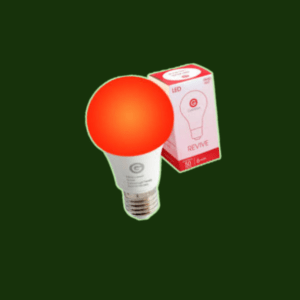
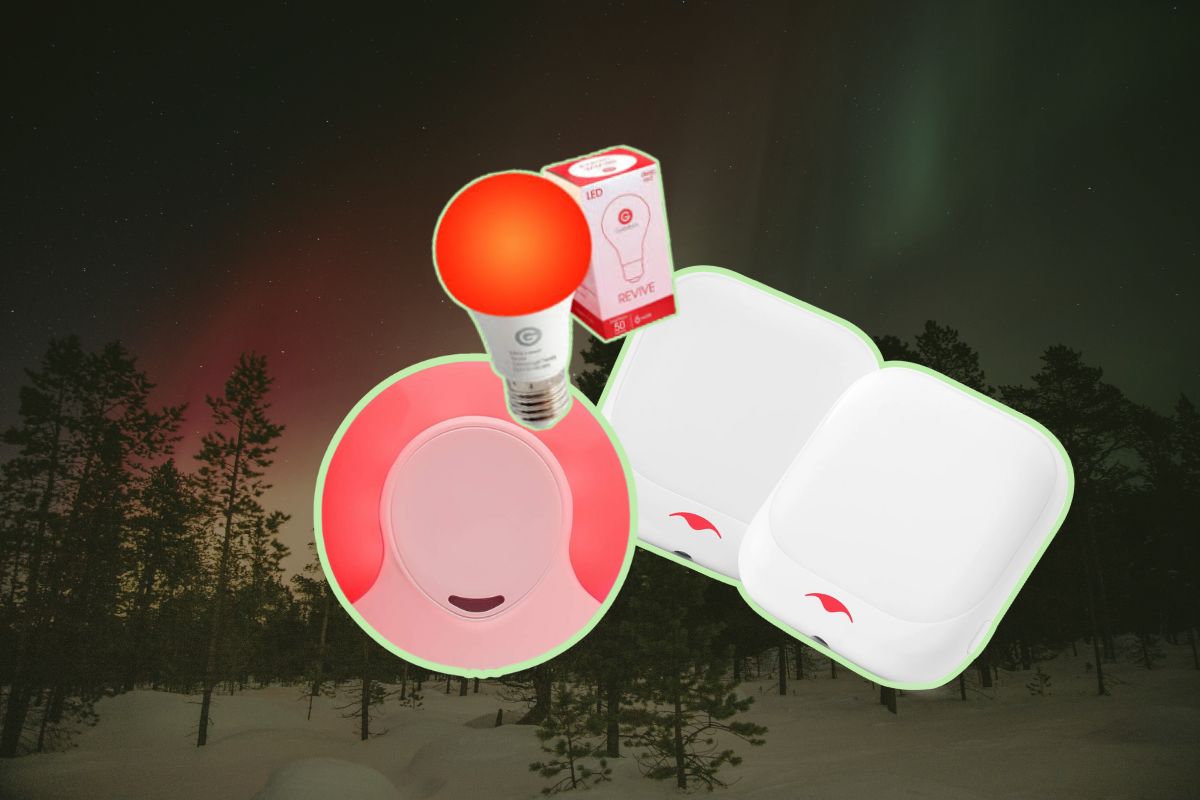
Revive- 670nm Red Light Bulb by Gamma
The Revive-670 Red Light Bulb by Gamma emits deep 670 nm red light, a narrowband spectrum that avoids blue/green wavelengths that disturb sleep rhythms. Great as a sleep-friendly night light in spaces like hallways or kids’ rooms.
Emagine A Sleep Aid LED Night Light
Emagine A Sleep Aid LED night light- A simple, soft red LED night light set with dusk-to-dawn sensors. Emits low-impact red light ideal for bathrooms, hallways, or bedrooms where you want visibility without hard brightness.
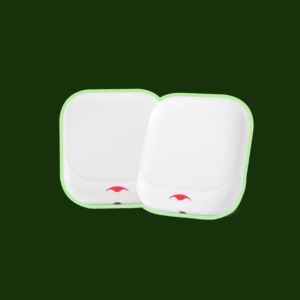
Manta TrueRed Night Light
The Manta TrueRed night light emits true red light with adjustable brightness and automatic on/off; designed specifically to provide nighttime visibility without interfering with sleep.